


Anti-Fog Spray
Description
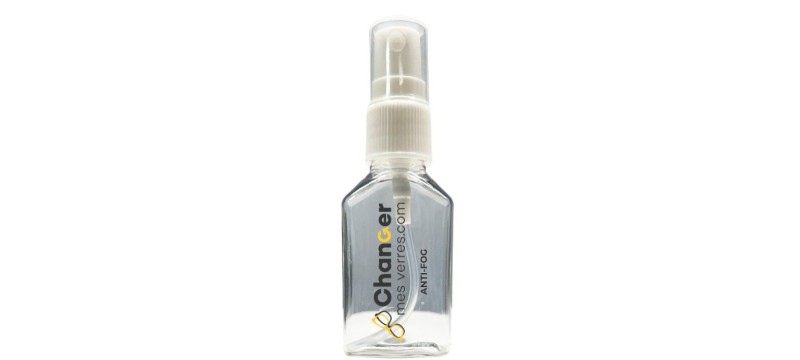
Anti-fog spray for glasses
This spray prevents fog from forming on your lenses during temperature changes: moving from cold to warm, wearing a mask, physical activity, or cooking. A single application keeps lenses clear for 4 to 8 hours in everyday use.
It works on most lenses: anti-reflective-coated lenses, organic and polycarbonate lenses, tinted sunglass lenses, ski goggles, and screens. The 30 ml bottle provides around 250 applications.
Neutral-pH formula (5-7), free from ammonia and solvents, with a low alcohol content.
Directions for use
Spray a small amount onto both sides of each lens, then wipe with a clean, dry cloth — preferably microfiber — until the lenses are perfectly clear. Reapply when the anti-fog effect starts to fade.
Cloth not included.
Safety precautions
Hazardous. Follow the precautions for use.
Warning
Precautionary statements:
- Keep out of reach of children.
- Do not ingest.
- If in eyes: rinse cautiously with water for several minutes. Get medical advice if irritation persists.
- Store in a dry, well-ventilated place.
Hazard statements:
- H319 — Causes serious eye irritation.
- EUH208 — Contains methylisothiazolinone and methylchloroisothiazolinone. May produce an allergic reaction.
WARNING: Changermesverres.com and its logo are registered trademarks of the company Changer Mes Verres.
Changer Mes Verres is not affiliated with the following brands: Oakley, Ray-Ban, Persol, Rudy Project, Moscot, Oliver Peoples, Paul and Joe, Barton Perreira, Maui Jim, Izipizi.
Any use of these brand names is solely for the purpose of describing the product. These trademarks belong to third parties with no connection to Changer Mes Verres.
These brands are in no way associated with changermesverres.com and do not endorse, sponsor, promote, or have any involvement whatsoever with the products of Changer Mes Verres.
* All information regarding warranties can be found in the Terms and Conditions of Sale.
** Numerous scientific studies suggest that blue light is the most harmful type of light for the retina, with increased effects during prolonged exposure. It is emitted in large amounts by screens such as computers, smartphones, and televisions.


